

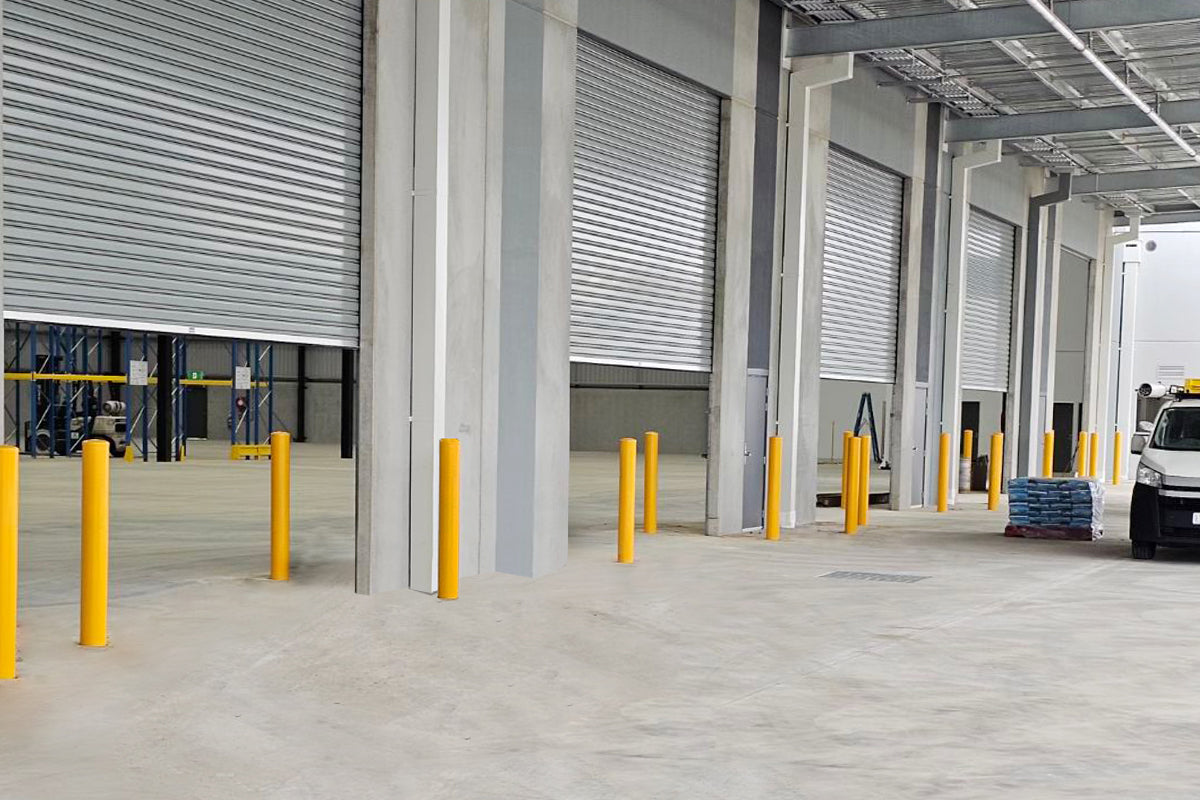
Most sites have a spot where people and vehicles cross paths. A roller door. A blind corner at the end of a racking aisle. A car park walkway outside the front entrance.
Nothing happens there for months. Then one day, the timing is different.
October is National Safe Work Month, and Safe Work Australia's latest national figures show why those crossing points deserve a closer look.
The Numbers Behind Safe Work Month 2026
- 222 workers died from traumatic injuries at work in 2025 – the highest annual toll since 2012.
- Vehicle incidents were the leading cause, accounting for 92 of those deaths (41%).
- Around 147,200 serious workers' compensation claims were lodged in 2024–25 (preliminary data) – more than 400 every day.
Source: Safe Work Australia, Key Work Health and Safety Statistics Australia 2026
Behind every one of those numbers is a worker, a family and a workplace changed by an incident that, in many cases, could have been prevented.
This year's National Safe Work Month theme, Safe work is for life, is a reminder that safety isn't only about reacting after something goes wrong. It's about designing hazards out before they cause harm.
Where People And Vehicles Cross Paths
Vehicle incidents on worksites rarely happen in open space. They happen where people and vehicles are forced into the same area, often with limited visibility and little time to react. Common crossing points include:
- Roller doors and loading docks, where trucks and forklifts move in and out while staff walk past
- Blind corners and aisle ends, where a forklift driver and a pedestrian can't see each other until the last moment
- Car park walkways and entrances, where people walk between parked and moving cars
- Shopfronts and building entrances, where a vehicle that mounts the kerb can reach people and property
- Reversing areas, where drivers back up without a clear view behind them
Not sure where these spots are on your site? Look for the dents. Damaged walls, door frames, columns and racking show exactly where vehicles have been getting too close.
Why Physical Separation Comes First
Under Australian work health and safety laws, including Victoria's OHS Act, businesses must eliminate risks so far as is reasonably practicable. Where a risk can't be eliminated, it must be minimised so far as is reasonably practicable.
WHS regulators rank the ways to do that in the hierarchy of control. The most effective controls remove the risk or physically keep people away from it. The least effective rely on people remembering a rule.
For people and vehicles, that ranking looks like this, from most to least effective:
- Remove the crossing point. Redesign routes so pedestrians never need to enter vehicle areas.
- Physically separate or protect. Bollards, barriers and wheel stops, supported by visibility aids such as convex mirrors.
- Rules and markings. Signs, line marking, speed limits, procedures and training.
- Protective clothing. Hi-vis vests and other PPE.
Safe Work Australia's workplace traffic management guidance puts it simply: where possible, make sure people and vehicles cannot interact.

A bollard still works on a busy day, when a delivery is running late, or when someone takes a shortcut. Signs and line marking still matter, but they work best alongside physical controls, not in place of them. Most sites need both.
Every Site Is Different
The right controls for your site depend on a site-specific risk assessment: the vehicles you run, their size and speed, how many people are on foot, and your layout.
Talk to the people who drive and walk the site every day. Consulting workers is part of your WHS duties, and they'll know where the close calls happen. Where impact protection is critical, get advice from a qualified engineer on bollard selection and footings.
Three Controls That Help Separate People And Vehicles
Convex Safety Mirrors: See What's Coming
Blind corners don't announce themselves. A forklift turning out of an aisle and a worker walking around a corner can be seconds apart without either knowing it.
A convex safety mirror gives drivers, spotters and people on foot a view of what's approaching before it arrives. Mirrors are most useful at:
- Aisle ends and racking intersections
- Blind corners in warehouses and car parks
- Driveway exits and car park ramps
- Loading dock approaches
Keep in mind that a mirror improves visibility; it doesn't stop a vehicle. Use mirrors alongside separation, speed limits and marked crossings, not instead of them.
Enforcer's convex safety mirrors range from 450mm to 1000mm, with options for wall or pole mounting. Our Convex Mirror Buying Guide can help you choose the right size for the distance and location.

Wheel Stops: Stop Vehicles Short
It's the car park hazard few people think about. A vehicle that rolls a metre too far can hit a wall, damage a building, or pin someone against a kerb or footpath.
Wheel stops give drivers a clear stopping point in each bay, keeping bumpers away from walkways, walls, shopfronts and pedestrians. They're a simple control for:
- Retail and commercial car parks
- Staff parking and loading areas
- Apartment and strata car parks
- Bays that face footpaths, walls or building entrances
Wheel stops set where a parked vehicle stops; they aren't designed to act as a barrier against a moving vehicle. Where a vehicle could reach a pedestrian area at speed, consider bollards or barriers as well.
Enforcer's range includes recycled plastic, rubber and polyethylene wheel stops, plus options for truck, accessible and EV bays. Compare them in our Wheel Stop Buying Guide.

Bollards: Keep Them Apart
Where vehicles and people must be kept apart, bollards create a fixed physical barrier. They protect pedestrians, buildings and equipment at entrances, walkways, shopfronts and loading docks.
The right bollard depends on your site:
- In-ground bollards are set into a concrete footing. They're typically chosen for higher-risk areas and building perimeters.
- Surface-mounted bollards are fixed to existing concrete with a base plate. They suit sites where excavation isn't practical, provided the slab is suitable.
- Removable and fold-down bollards suit access points that need to open, such as delivery areas, emergency access and reserved parking.
Vehicle type, speed, approach angle and what you're protecting all affect the choice. Our Bollard Buying Guide and Guide to Bollard Spacing and Installation explain the options.

Walk Your Site: A 20-Minute Checklist
The best place to start is a simple walk around your site. Take 20 minutes and look for:
- Dents and scrapes on walls, columns, door frames and racking
- Blind corners where drivers and pedestrians can't see each other
- Walkways that cross vehicle routes without a barrier or marked crossing
- Car park bays that face footpaths, walls or entrances without wheel stops
- Entrances and shopfronts a vehicle could reach if it mounted the kerb
- Reversing areas where drivers have limited rear visibility
Then ask the people who work there every day where they've had close calls.
Each item you tick is a crossing point worth controlling – and worth recording in your risk assessment.
See It On Site: Bowens, Laverton North
At Bowens' Timber and Hardware Store in Laverton North, Victoria, customers, staff and delivery vehicles move around the site throughout the day for collections, trade deliveries and daily operations.
Enforcer supplied high-visibility yellow in-ground and surface-mounted bollards, using a mix of both to suit different areas of the store. The bollards mark and protect designated areas and help reduce the risk of accidental vehicle impacts.

More projects where people and vehicles share space:
- Office & Warehouse Traffic and Safety Improvements – Dandenong South, VIC
- Complete Car Park Safety Upgrade at Epping Home & Life – Epping, VIC
Safe Work Is For Life: Your Next Step
You don't need to fix everything at once. Start with the crossing point that worries you most, and work through the hierarchy of control from there.
If you'd like help choosing, our Resource Hub has buying guides, product data sheets and installation guides. Need it installed? Our installation services team can help.
Call 1300 854 010, email sales@enforcergroup.com.au, or browse the full range.


