

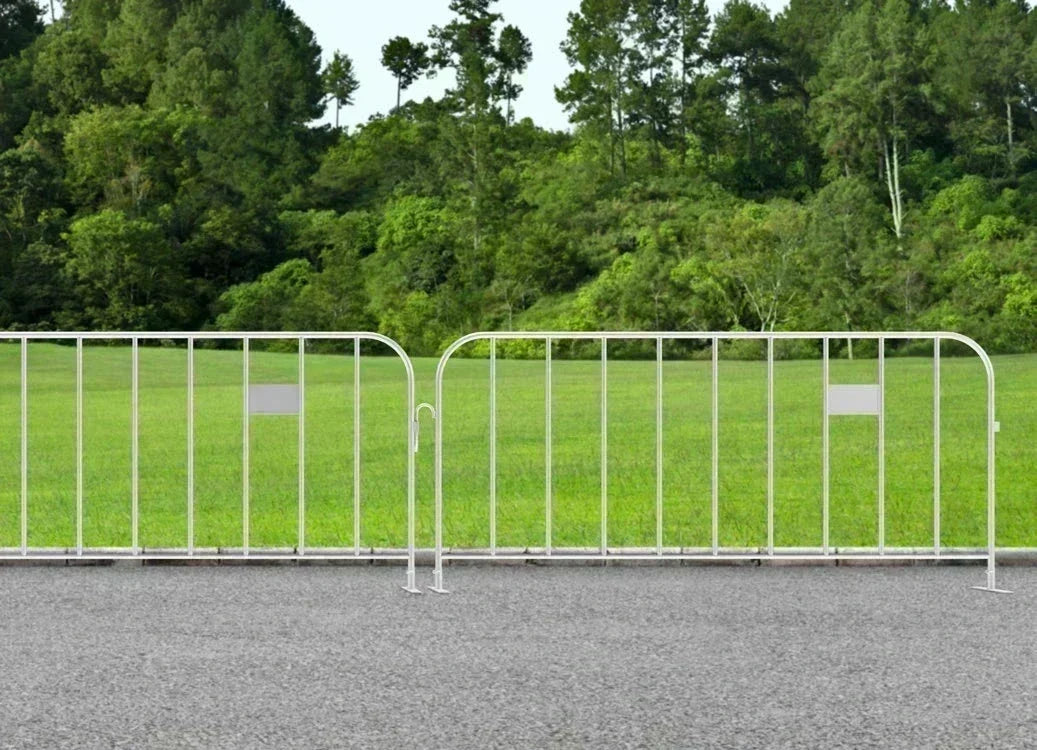
Barriers are safety and access control solutions designed to manage the movement of vehicles and pedestrians. They are used to guide traffic, restrict access to hazardous areas, manage queues, protect assets, and improve safety across commercial, industrial, and public environments.
They come in a wide range of configurations, from temporary portable systems to fixed installations, and can be used independently or as part of a larger site safety setup.
This guide outlines the main barrier types and materials to help you choose the right solution for your application.
Common Barrier Materials
Barrier systems are made from a range of durable materials selected for strength, visibility, and suitability across different environments.
Steel
Steel is often used in expandable barriers and crowd control systems. It provides high strength, stability, and durability for both indoor and outdoor use, and is often powder coated to improve visibility and resistance to wear.
Plastic
Plastic is a lightweight material used in portable and temporary barrier systems. It is easy to transport and commonly used in cone top, expandable, and water barrier applications.
Polyethylene
Polyethylene is a high-density, UV-stable material used in fence barriers. It provides impact resistance and stability, making it ideal for securing areas or directing traffic away from hazards.
Polyester
Polyester is used in retractable barrier belts due to its strength and flexibility. It provides smooth operation and high visibility for crowd control and queue management systems.
Types of Barriers to Choose From
Retractable BarriersRetractable barriers use a pull-out belt system to quickly restrict access to areas that need to be cordoned off. They are ideal for temporary or changeable environments where flexible access control is required. Common applications include retail stores, warehouses, airports, and reception areas. Variations Include: Cone Top Barriers Wall Mount Barriers Belt Barriers |
 
|
 |
Expandable BarriersExpandable barriers are portable fencing systems designed to create temporary restricted zones without permanent installation. Their collapsible design allows them to be deployed quickly and repositioned as required. They are commonly used in maintenance areas, plant rooms, loading docks, and worksites. |
Crowd Control BarriersCrowd control barriers are freestanding systems designed to manage pedestrian movement, guide queues, and restrict access in public and commercial environments. They provide a flexible and highly visible solution for controlling foot traffic in both temporary and permanent settings. They are commonly used in event venues, shopping centres, exhibitions, stadiums, and public gatherings. Available in a range of durable materials and finishes, they are designed for stability, portability, and ease of deployment. |
 |
 |
Water Filled BarriersWater filled barriers are modular traffic control systems designed to create temporary or semi-permanent separation between vehicles and pedestrians. When filled, they provide added weight and stability, making them suitable for roadworks, construction sites, and high-traffic zones. They are best suited to roadworks, construction zones, traffic diversions, and parking areas where quick installation, visibility, and impact resistance are required. |
Need Help Choosing the Right Barrier?
Selecting the right barrier depends on your environment, usage frequency, and whether a temporary or permanent solution is required.
Speak with the Enforcer team for expert advice on the most suitable barrier system for your project.
More from Enforcer
We also supply a full range of safety and traffic control solutions, including Bollards, Wheel Stops, and Site Protection Equipment designed for commercial and industrial applications.


